How to use it
A few weeks of notes beats a single bad day.
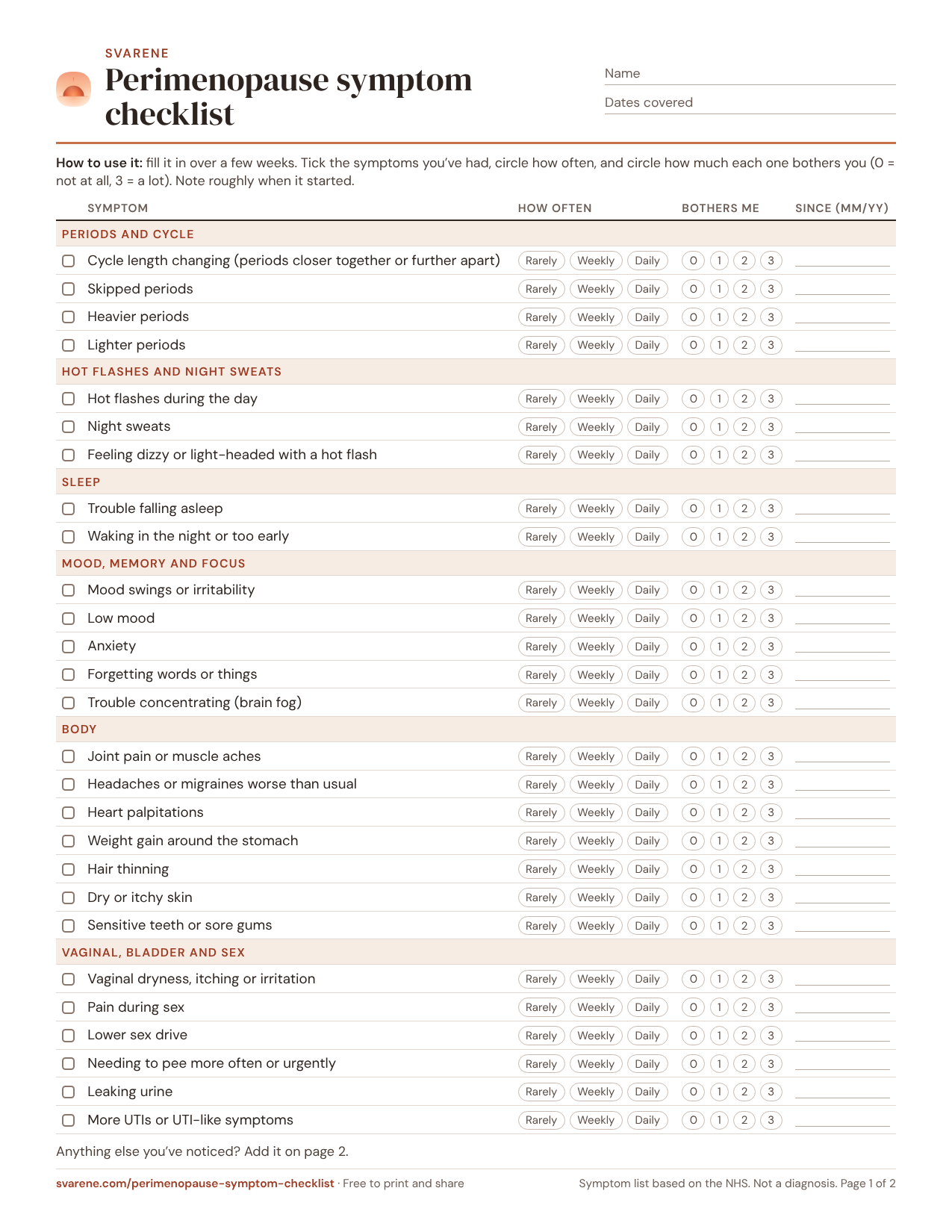
Print the checklist, or tick symptoms on this page and print your list. Fill it in over the weeks before your appointment rather than in the waiting room, so you can see what keeps coming back.
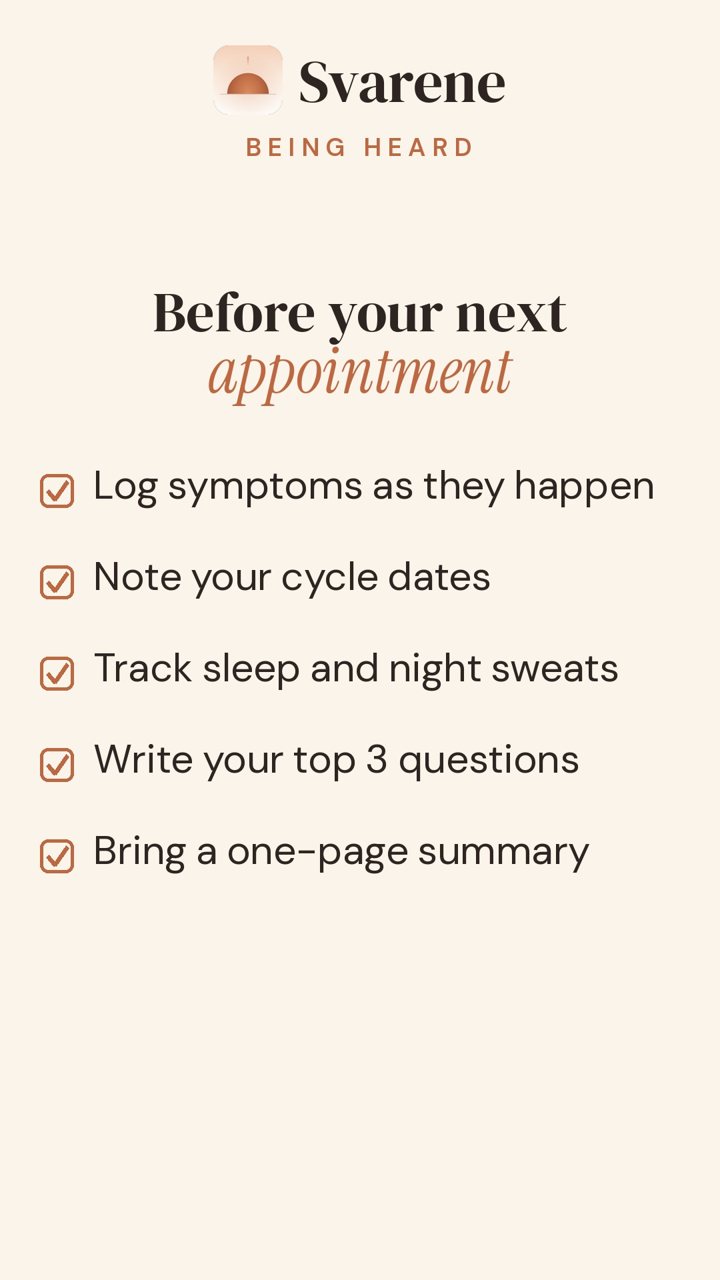
For each symptom you have, mark how often it happens and how much it bothers you. Then write down your three most bothersome symptoms, how they affect your daily life (work, sleep, relationships), and the questions you want answered. Appointments are short, and a written list keeps the important things from being forgotten.
Cycle changes
What changing periods can look like.
In perimenopause the gaps between periods may get longer or shorter, flow may be lighter or heavier, and some periods may be skipped. Mayo Clinic describes a persistent change of seven days or more in cycle length as a sign of early perimenopause, and 60 days or more between periods as a sign of late perimenopause.
That’s why the second page has room for your last six period start dates. Dates are easier to compare than impressions.
Don’t wait on these
Bleeding to mention to a clinician promptly.
Changing periods are common in perimenopause, but some bleeding should be checked rather than tracked. Mayo Clinic and the NHS advise seeing a doctor for:
- Very heavy bleeding
- Bleeding that lasts longer than 7 days
- Bleeding between periods
- Periods less than 21 days apart
- Any bleeding after 12 months without a period
The NHS notes that bleeding after menopause is usually not serious but should always be checked, because the less common serious causes are easier to treat when found early.
How it’s diagnosed
What you’ve noticed is a big part of the evidence.
NICE guidance says that for otherwise healthy people aged 45 or older, a clinician can identify perimenopause without laboratory tests when hot flushes or night sweats have recently started alongside changes in periods. Younger people may be offered tests. If your symptoms started months or years ago and are still bothering you, you can bring them up with a clinician. Either way, a clear description of what you’ve noticed, and for how long, is a big part of the conversation.
The NHS says symptoms usually last around 7 to 9 years, sometimes longer, and can change over time. Keeping a record makes those changes easier to see.
If you feel very low
Some things shouldn’t wait for a booked appointment.
Low mood and anxiety are common in perimenopause and worth raising. If you feel very low or have thoughts of harming yourself, get help now: contact your doctor, your local emergency number, or a crisis line (call or text 988 in the US).
Prefer your phone?
The same record, kept as you go.
Svarene is a perimenopause tracker for iPhone and Android. Logging symptoms with severity and time of day, cycles, sleep, mood, treatments and supplements is free. With Premium, Explore shows when symptoms happen and what you logged around them, and the Doctor Report turns the sections you choose into a PDF made on your phone.


Screens shown are from the Svarene app. Aurora is a fictional example profile.


Evidence used on this page