
Visual guides
Perimenopause, one picture at a time.
The charts, carousels and short videos we share on social, collected in one place. Every number links to the study it came from.
 Video
VideoIs Menopause Making Me Gain Weight?
SWAN: weight rose 2.1 kg over 3 years, not linked to menopause stage. Deep belly fat rose 8.2% a year in the 2 years before the final period and 5.8% a year after.
 Video
VideoBone Loss Starts Before Your Last Period
SWAN, 862 women: bone loss began 1 year before the final period. Of 10.6% spine bone lost over 10 years, 7.38% came in the 3 years from 1 year before to 2 years after the final period.
 Video
VideoHeavy Periods, Low Iron, Exhausted
63% of 330 women with confirmed heavy periods had been diagnosed with low iron or anaemia. In a trial, iron eased fatigue 29% vs 13% on placebo, only in women with low iron stores.
 Video
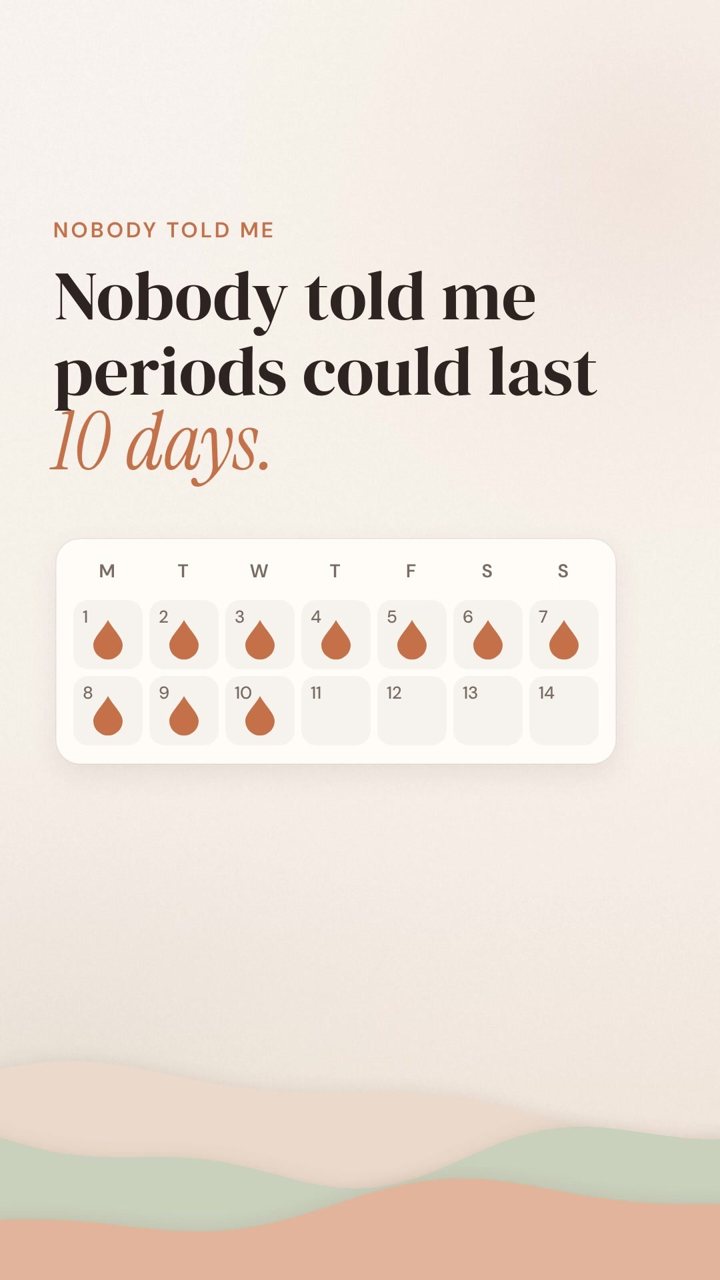
VideoNobody Told Me: 10-Day Periods
SWAN daily bleeding diaries from 1,320 women: 77.7% had periods of 10+ days at least 3 times; 66.8% had 6+ days of spotting; 34.5% had 3+ days of heavy bleeding.
 Video
VideoYour Inner Thermostat
In a small lab study, women without hot flashes had a 0.4 C comfort zone between sweating and shivering. Women with hot flashes: 0.0 C.
 Video
VideoWhy Everything Seems to Work for Hot Flashes
In 24 trials, women on a dummy pill saw hot flashes fall 57.7%. The 2023 Menopause Society position statement sorts which non-hormone options actually have evidence.
 Video
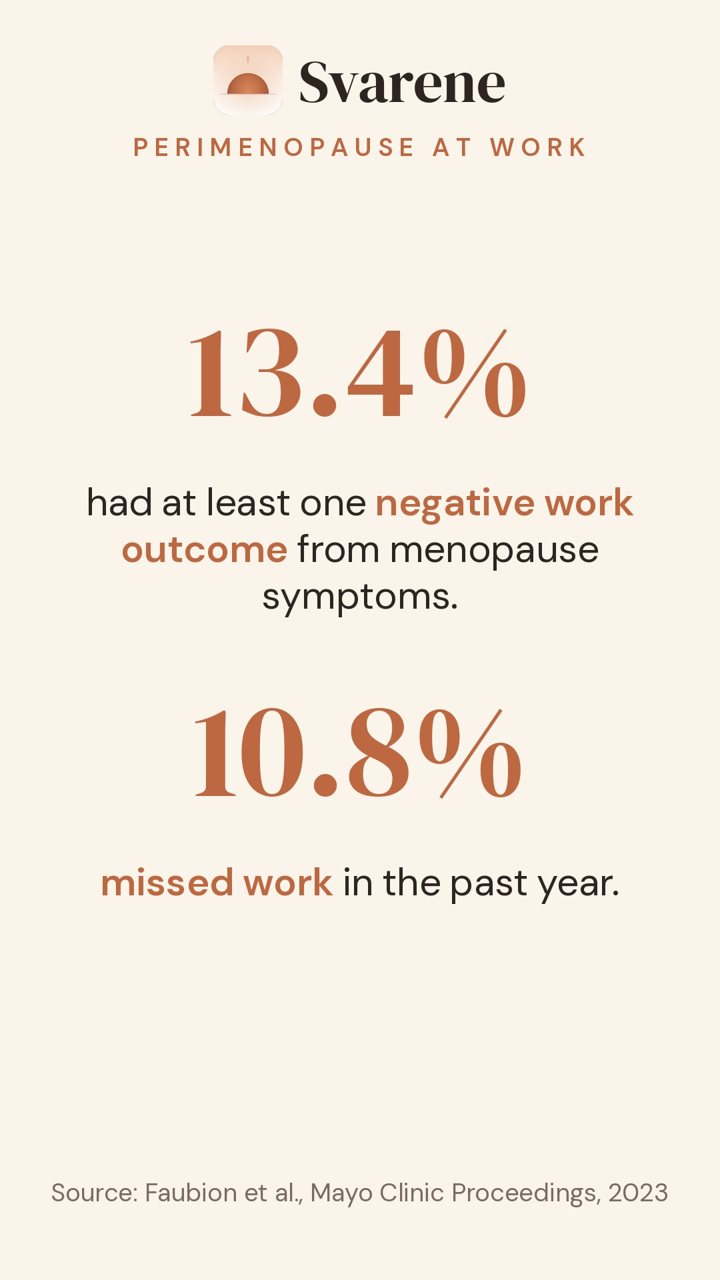
VideoPerimenopause follows you to work
Mayo Clinic surveyed 4,440 working women aged 45-60: 13.4% had a negative work outcome from menopause symptoms, 10.8% missed work, an estimated 1.8 billion US dollars a year in missed U.S. workdays.
 Video
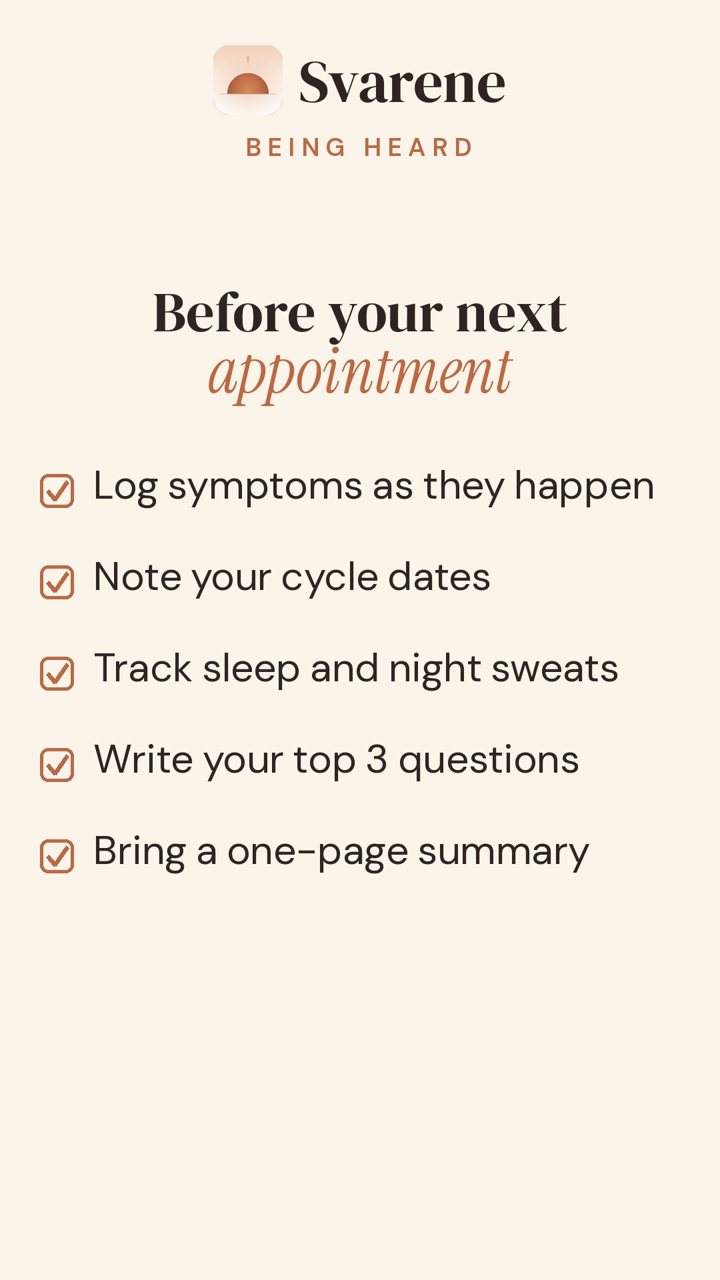
VideoIt shouldn't take this many appointments
31% of UK women who went to their GP said it took many appointments before menopause was recognised. A checklist for your next appointment.
 Video
VideoHow long does perimenopause actually last?
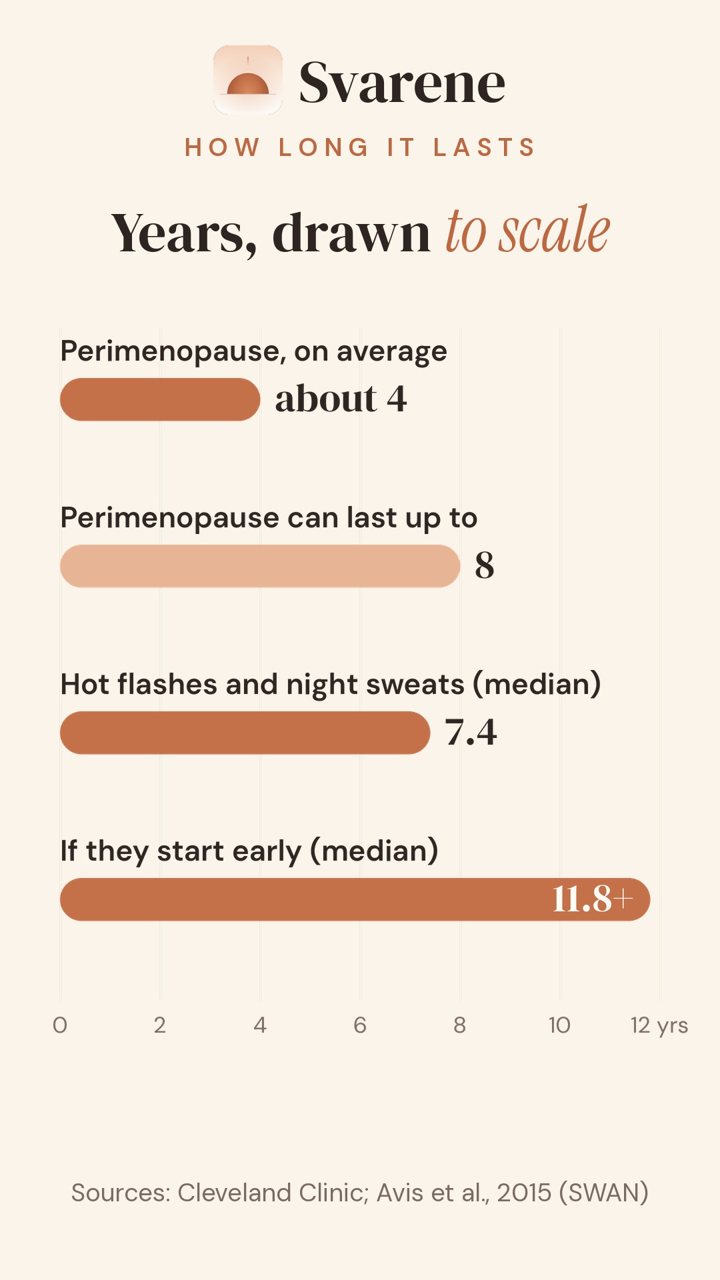
Perimenopause averages about 4 years and can last up to 8. In SWAN, frequent hot flashes lasted a median of 7.4 years, and more than 11.8 years when they started early.
 Video
VideoMore things women hear in perimenopause
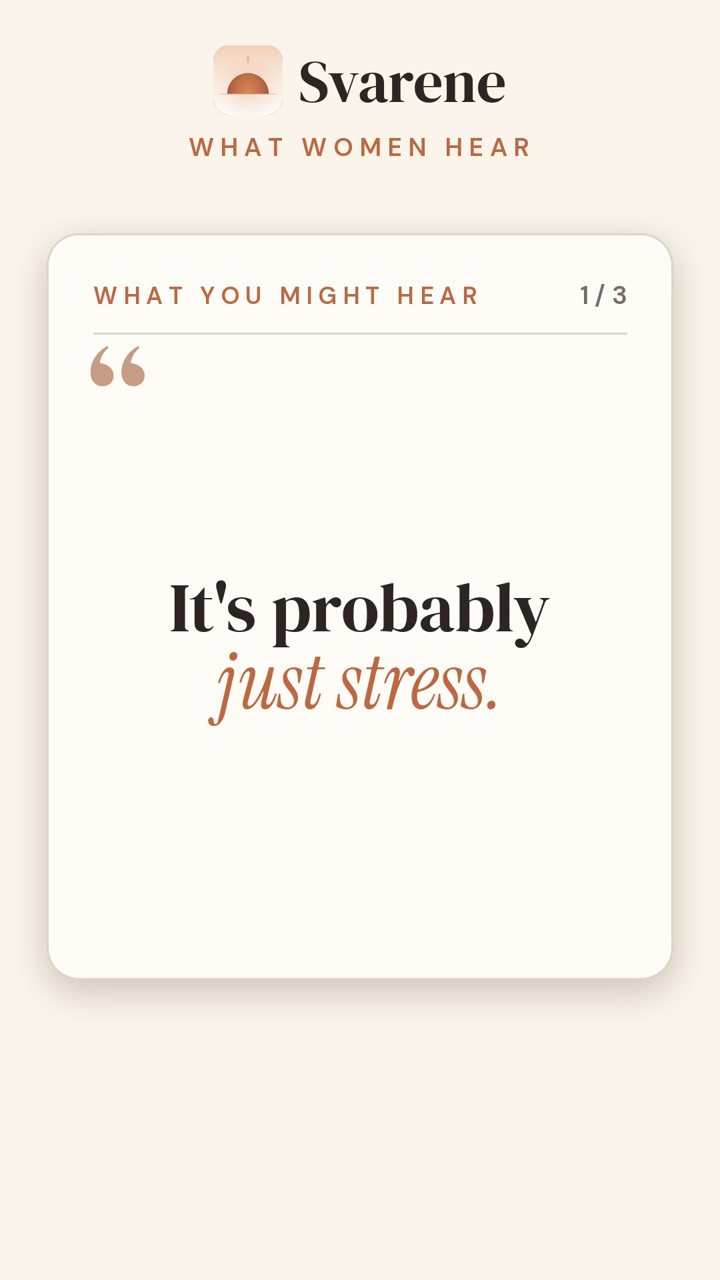
"It's just stress." "It's just hot flashes." "You're just getting older." What the evidence says instead.
 Video
VideoYour doctor may not have been trained for this
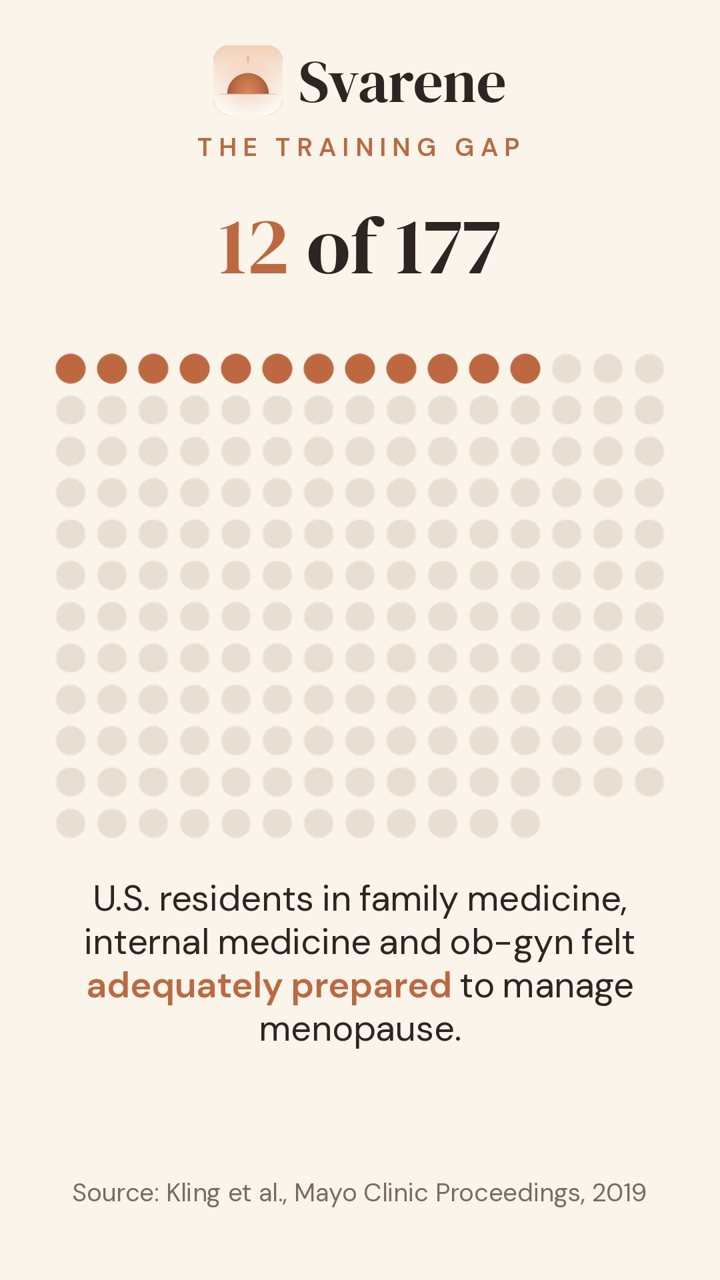
Only 12 of 177 U.S. residents (6.8%) felt adequately prepared to manage menopause, and 31.3% of responding ob-gyn residency programs had a menopause curriculum.
 Video
VideoAwake at 3 a.m. again?
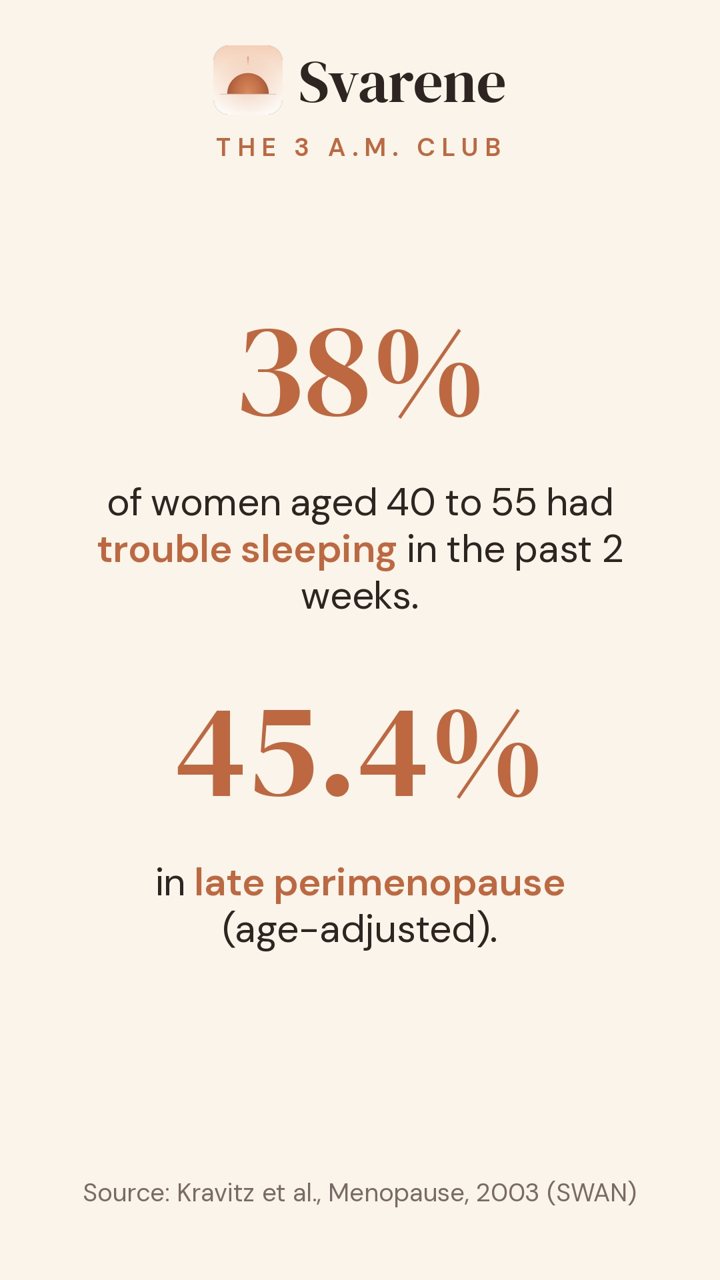
In SWAN, 38% of women aged 40-55 reported trouble sleeping, rising to 45.4% in late perimenopause. What to log tonight.
 Video
VideoWhat women say vs. what gets written down
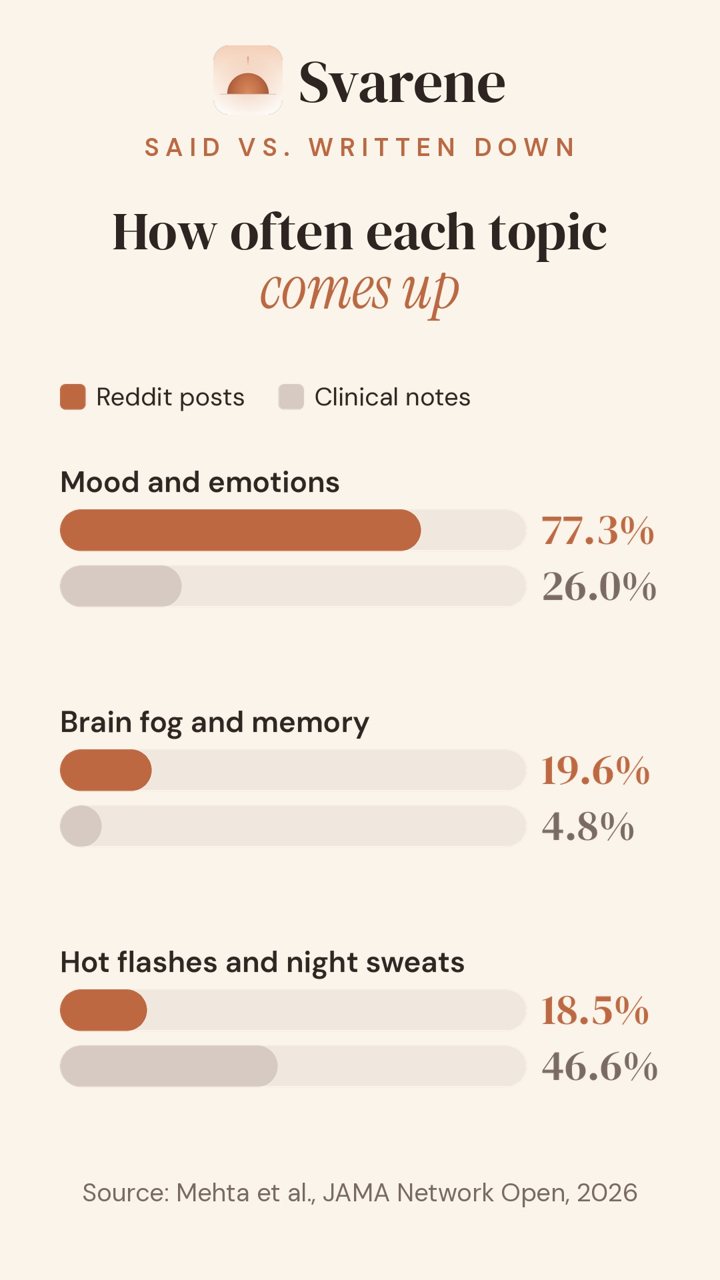
A 2026 study compared 577 top Reddit menopause posts with 646 clinical notes. Mood came up in 77.3% of posts but 26.0% of notes; brain fog in 19.6% vs 4.8%.
 Video
VideoThings women hear in perimenopause
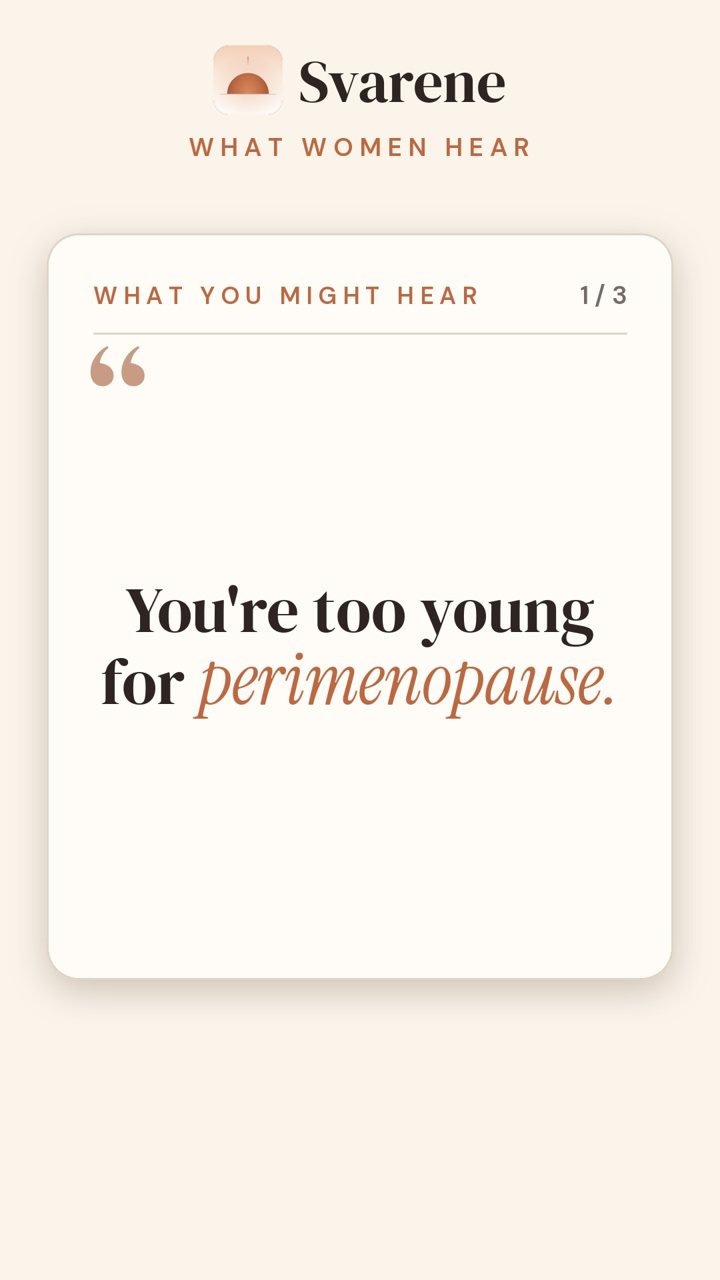
Three things women are often told in perimenopause, flipped over to what the evidence says: it can start in your mid-30s, hormone tests aren't reliable for diagnosing it, and hot flashes last a median of 7.4 years.
 Video
VideoNobody Told Me: Frozen Shoulder
Nobody told me a frozen shoulder could be perimenopause. Frozen shoulder most often strikes between ages 40 and 60, and in women more than men.
 Video
VideoNobody Told Me: Lost Words
Nobody told me losing words mid-sentence could be perimenopause. In a study that followed 2,362 women for about 4 years, memory gains stalled in perimenopause, then rebounded after menopause.
 Video
VideoNobody Told Me: Sudden Rage
Nobody told me sudden, boiling rage could be perimenopause. 53% of women with perimenopause symptoms blamed them on stress.
 Video
VideoEstrogen does more than you think
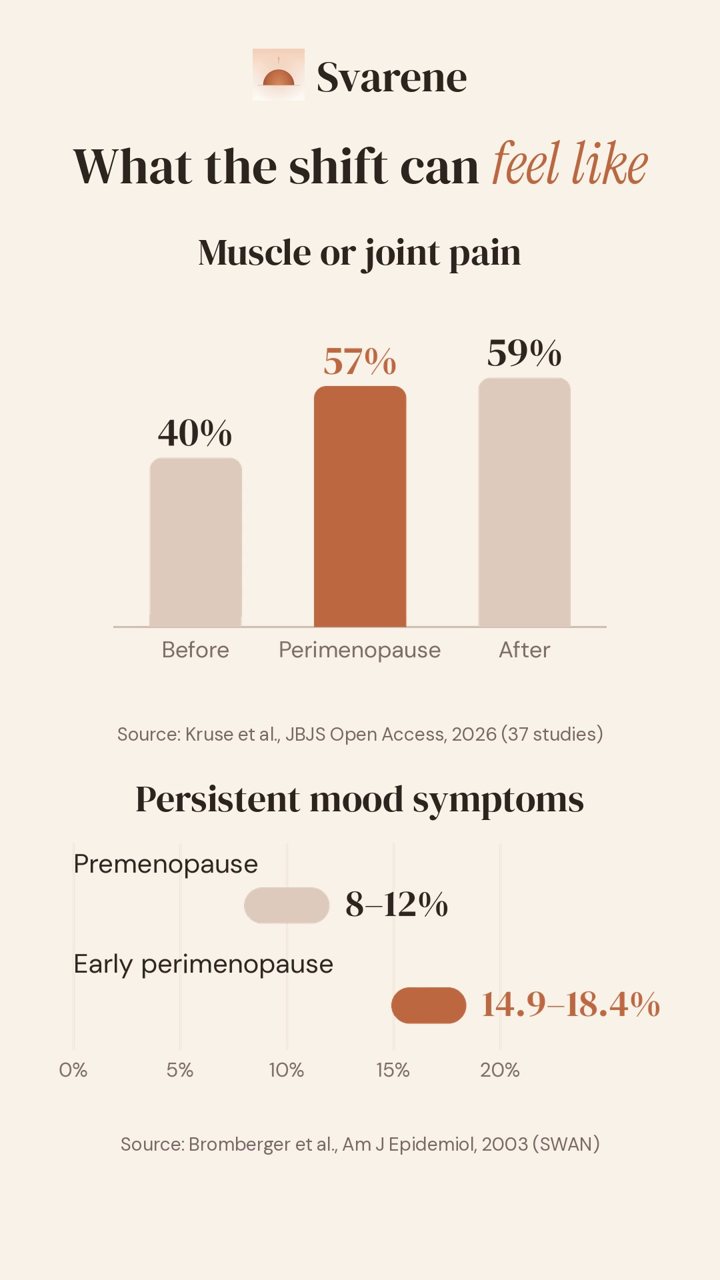
One hormone, at least five body systems. Muscle or joint pain climbs from 40% before perimenopause to 57% during it, and persistent mood symptoms rise from 8–12% to 14.9–18.4%.
 Video
VideoHot flashes don't clock out at bedtime
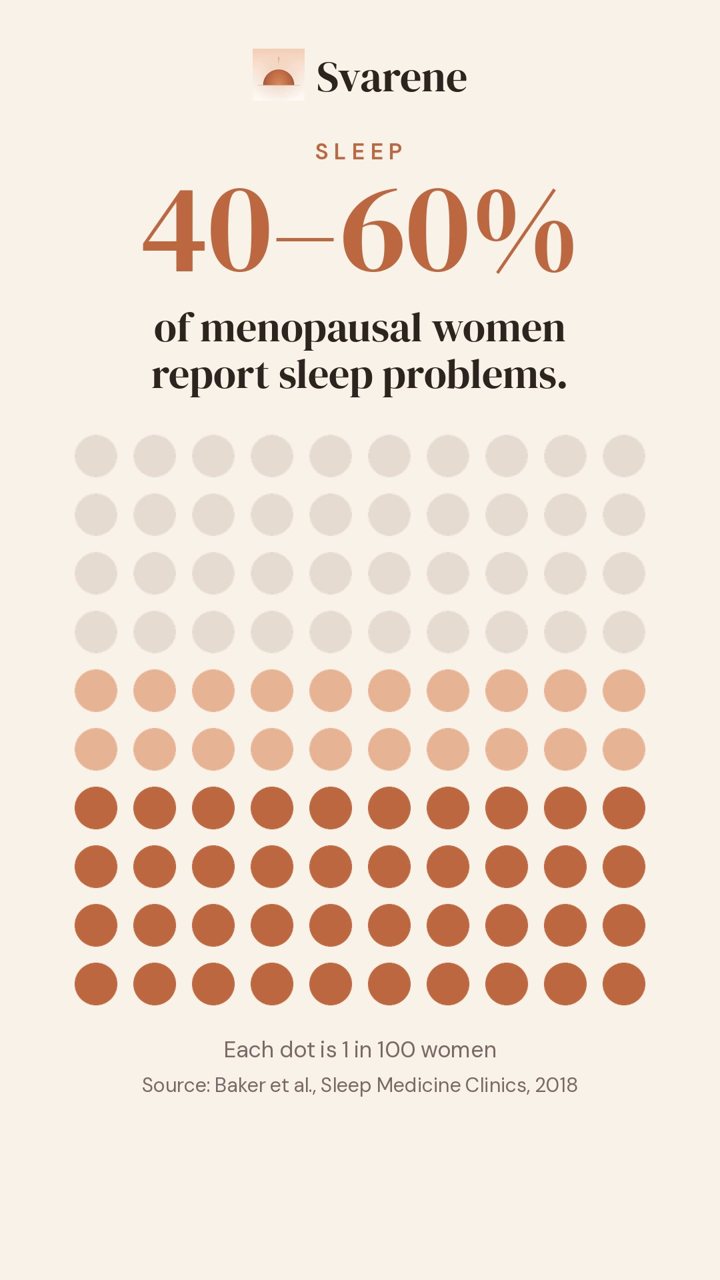
40–60% of menopausal women report sleep problems. Women with moderate to severe hot flashes are almost 3× as likely to wake often at night as women without them.
 Video
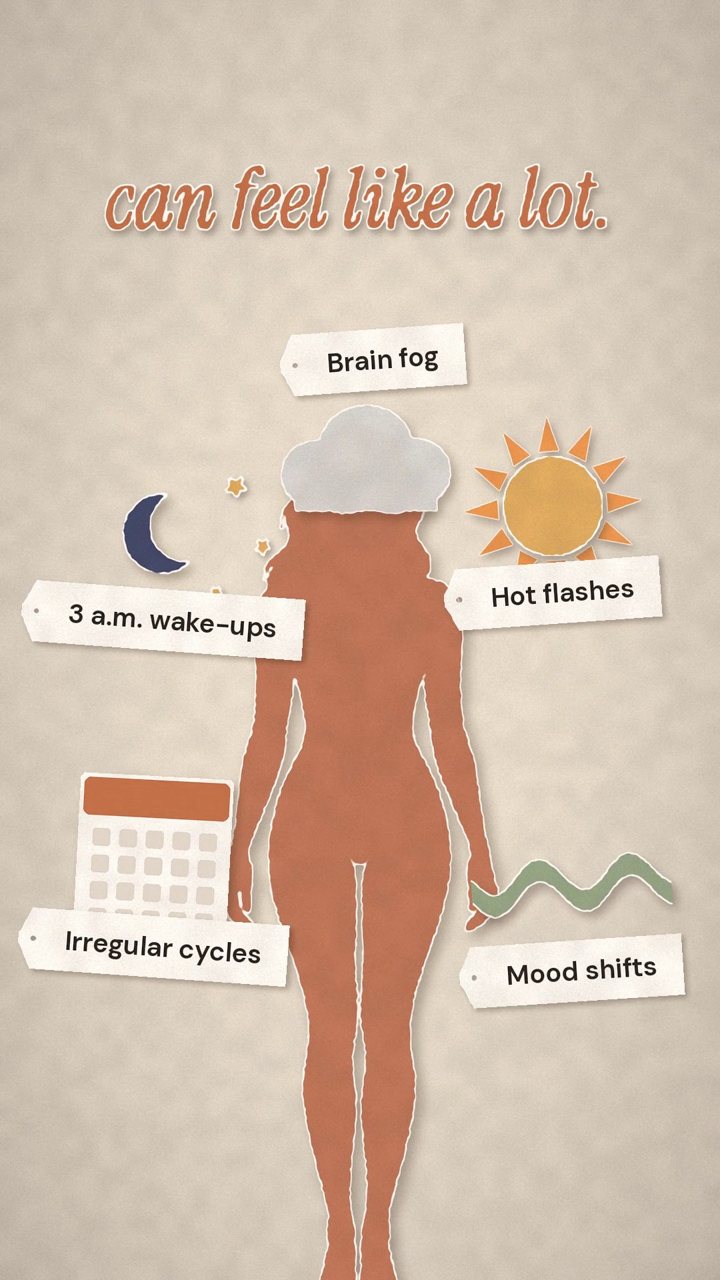
VideoPerimenopause, pieced together
A paper stop-motion short: hot flashes, 3 a.m. wake-ups, brain fog, irregular cycles and mood shifts, gathered into one log you can bring to your doctor.
 Video
VideoNobody Told Me: Joint Pain
Nobody told me stiff, aching joints could be perimenopause. 57% of women in perimenopause have muscle or joint pain.
Lost your words? Here's the good news.
In the SWAN study, 2,362 women had their memory tested over about four years. Learning gains stalled during perimenopause, then came back after menopause.
Achy joints at 45? It might be perimenopause.
A review of 37 studies and 93,021 women found muscle or joint pain in 57% of women in perimenopause, up from 40% before it. Here is what that looks like, and what is worth logging.
 Video
VideoNobody Told Me: Itchy Skin
Nobody told me itchy, crawling skin could be perimenopause. 4 in 10 women never considered perimenopause as the cause of their symptoms.
 Video
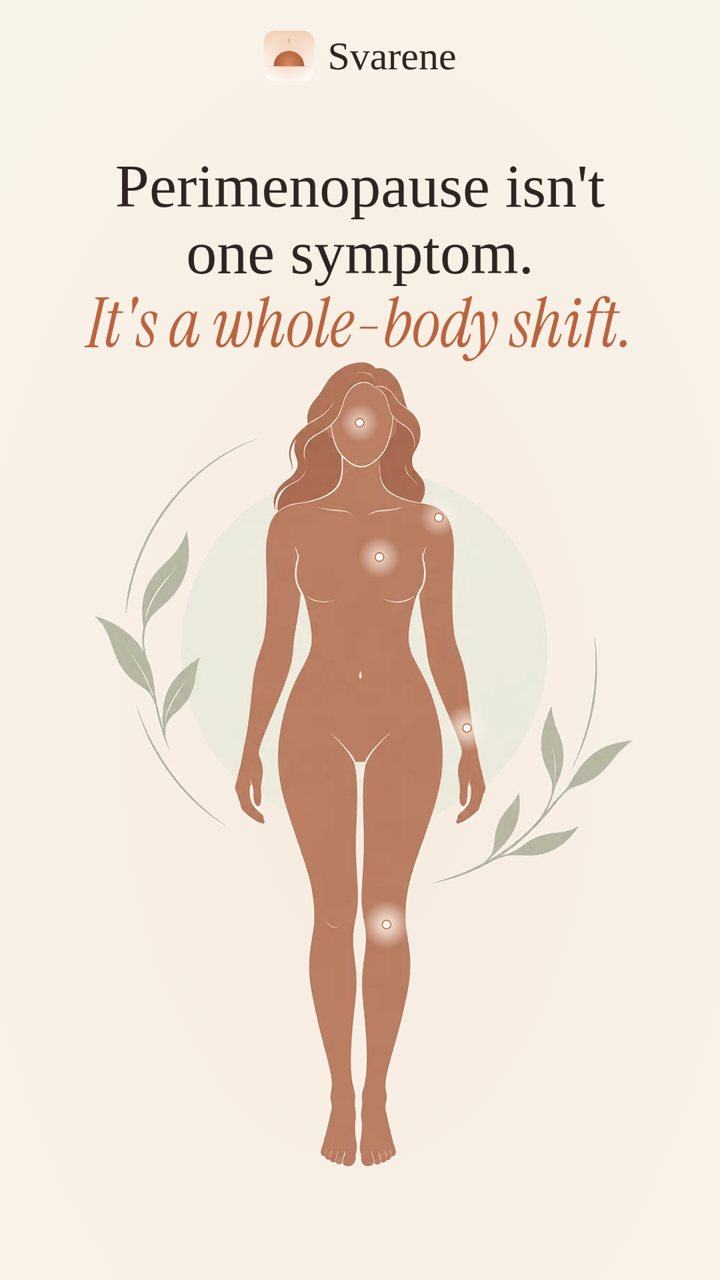
VideoThe Body Map
Perimenopause isn't one symptom. It's a whole-body shift: one hormone touches the brain, muscles and joints, circulation, skin, bone and sleep.
Available now on iPhone and Android
A calmer way to understand what is changing.
Private by design. Built for perimenopause. Ready when you are.